BMW 5 Series reliability, MPG and running costs
Figures updated
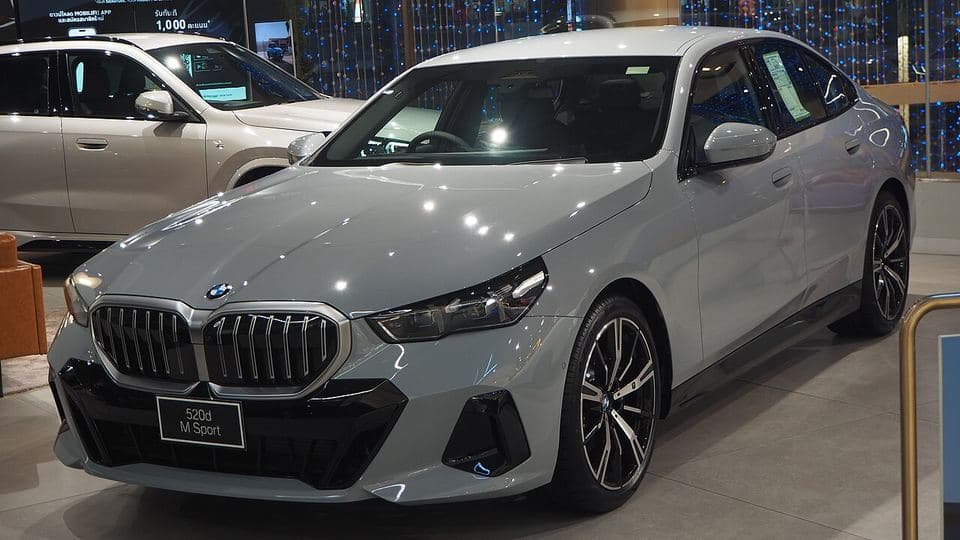
The BMW 5 Series is a executive car; the latest version we cover is the G60 (2023–). In 2024 MOT tests it scored 157 for reliability (100 is average), ranking 51 of 442, and 20.3% failed first time against a UK average of 28.5%. Its most common MOT failure is tread depth (2.4% of tests). Boot space is 520 litres.
BMW 5 Series key specs (G60 (2023–), 4-door saloon)
Price new
£53,110 to £79,830
Boot
520 litres
Seats
5
Size (L × W × H)
5,060 × 1,900 × 1,515mm
Power
208–489 PS
0–62mph
4.3–7.5 sec
Euro NCAP
5 stars (2023)
2023 on models; figures vary by version. Prices from the July 2026 price list. Sources: press.bmwgroup.com, bmw.co.uk, euroncap.com, bmw-brochure-downloads.co.uk.
Ranked 51 of 442 cars in the 2024 MOT Reliability League, and 3 of 16 executive cars
In 2024, 198,590 BMW 5 Serieses aged 3 to 20 had an MOT and 20.3% failed first time (UK average 28.5%). Taking age and mileage into account, the BMW 5 Series is 36% less likely to fail than the average car of the same age and mileage. At the first MOT, at three years old, 11.9% failed (UK 12.7%).
First-time fail rate
20.3%
UK 28.5%
Fail rate at 3 years
11.9%
UK 12.7%
Average miles a year
10,900
Typical age at test: 9 years
BMW 5 Series MOT failure rate by age
Most common BMW 5 Series MOT faults
- Tread depth: tread depth below requirements of 1.6mm2.4% of tests
- Condition: has ply or cords exposed2.0% of tests
- Coil spring: fractured or broken1.9% of tests
- Condition: has a cut in excess of the requirements deep enough to reach the ply or cords1.6% of tests
- Position lamp: not working1.5% of tests
- Washers: provides insufficient washer liquid1.0% of tests
What the BMW 5 Series fails on
| Area | Tests failing | vs similar cars |
|---|---|---|
| Tyres | 7.2% | About average |
| Lights and electrics | 5.6% | ▼ 57% less often |
| Suspension | 5.5% | ▼ 47% less often |
| Brakes | 3.1% | ▼ 61% less often |
| Visibility | 2.7% | ▼ 45% less often |
| Exhaust and emissions | 1.5% | ▼ 61% less often |
| Steering | 1.2% | ▼ 50% less often |
| Wheels | 1.1% | ▲ 2.2× as often |
| Seat belts and airbags | 0.9% | ▼ 28% less often |
| Body and structure | 0.8% | ▼ 80% less often |
How big is the BMW 5 Series's boot?
The G60 (2023–) BMW 5 Series has 520 litres of boot space with the rear seats up, according to the manufacturer. That's the 2nd biggest of the 8 executive cars we compare; the Mercedes-Benz E-Class has the most, at 540 litres. The previous G30 (2017–2023) had 530 litres.
What MPG does the BMW 5 Series do?
Official economy for the BMW 5 Series ranges from 18.8 to 68.9mpg across the 718 versions listed by the Vehicle Certification Agency (2004–2025). A typical petrol version manages 45.5mpg and a typical diesel 60.1mpg. Expect 10–15% less in real-world driving.
Work out a journey's fuel costHow much is road tax on a BMW 5 Series?
Any BMW 5 Series first registered from April 2017 pays the standard rate of £200 a year after its first year (2026/27 rates). Versions with a list price over £40,000 pay an extra £440 a year in years two to six; every current version is over that. A BMW 5 Series registered between March 2001 and March 2017 is taxed on its CO2: £20 to £790 a year.
Work out tax for a specific carBMW 5 Series specs and running costs
Official figures for 718 versions sold in the UK between 2004 and 2025.
Fuel types
Diesel, Hybrid, Petrol, Plug-in hybrid
Official economy
18.8–68.9 mpg
CO2
14–361 g/km
Power
208–489 PS
| Version | Fuel | Economy | CO2 | Car tax | Company car tax |
|---|---|---|---|---|---|
| 5 Series Saloon 520i M Sport Saloon208 PS · A8 · listed 2025 | Petrol | 45.5 mpg | 131g | £200 | 32% |
| 5 Series Saloon 520i M Sport Pro Saloon208 PS · A8 · listed 2025 | Petrol | 45.5 mpg | 132g | £200 | 32% |
| 5 Series Touring 520i M Sport Touring208 PS · A8 · listed 2025 | Petrol | 42.8 mpg | 139g | £200 | 33% |
| 5 Series Touring 520i M Sport Pro Touring208 PS · A8 · listed 2025 | Petrol | 42.8 mpg | 139g | £200 | 33% |
| 5 Series Saloon 530e M Sport Saloon299 PS · A8 · listed 2025 | Plug-in hybrid | 353.1 mpg | 14g | £200 | 10% |
| 5 Series Saloon 530e M Sport Pro Saloon299 PS · A8 · listed 2025 | Plug-in hybrid | 353.1 mpg | 14g | £200 | 10% |
| 5 Series Touring 530e M Sport Touring299 PS · A8 · listed 2025 | Plug-in hybrid | 313.9 mpg | 16g | £200 | 10% |
| 5 Series Touring 530e M Sport Pro Touring299 PS · A8 · listed 2025 | Plug-in hybrid | 313.9 mpg | 17g | £200 | 10% |
| 5 Series Saloon 550e xDrive M Sport Saloon489 PS · A8 · listed 2025 | Plug-in hybrid | 282.5 mpg | 18g | £200 | 10% |
| 5 Series Saloon 550e xDrive M Sport Pro Saloon489 PS · A8 · listed 2025 | Plug-in hybrid | 282.5 mpg | 19g | £200 | 10% |
| 5 Series Touring 550e xDrive M Sport Touring489 PS · A8 · listed 2025 | Plug-in hybrid | 256.8 mpg | 19g | £200 | 10% |
| 5 Series Touring 550e xDrive M Sport Pro Touring489 PS · A8 · listed 2025 | Plug-in hybrid | 256.8 mpg | 20g | £200 | 10% |
| 5 Series Saloon F10, From March 2010 518d - 17'' tyresM6 · listed 2018 | Diesel | 65.7 mpg | 114g | £200 | – |
| 5 Series Saloon F10, From March 2010 518d - 18'' tyres all-roundM6 · listed 2018 | Diesel | 62.8 mpg | 119g | £200 | – |
| 5 Series Saloon F10, From March 2010 518d - mixed 18'' & 19'' tyresM6 · listed 2018 | Diesel | 60.1 mpg | 124g | £200 | – |
Economy and CO2 are official NEDC (before 2018) or WLTP figures. Car tax is the yearly rate at current rates for a car first registered in the year listed, before any expensive car supplement. Company car tax is the 2026/27 benefit-in-kind rate. Showing the 15 most recent of 718 versions.
What a BMW 5 Series costs to fuel
- petrol, typical official 45.5mpg…
- diesel, typical official 60.1mpg…
Official figures are usually 10–15% better than real-world driving.
Work out a journey in a BMW 5 SeriesPrevious BMW 5 Series generations
BMW 5 Series G30 (2017–2023, 4-door saloon)
boot 530 litres · 184–530 PS · 0–62mph 3.8–7.9 sec · Euro NCAP 5 stars (2017)
13.0% of BMW 5 Serieses built 2017–2021 failed their 2024 MOT first time (all cars that age: 17.2%).
Buying a used BMW 5 Series?
Check the MOT history of the exact car: every result, advisory and mileage reading, free.
Compare the BMW 5 Series with other executive cars
Reliability, economy, car tax and running costs side by side.
Other BMW models
Frequently asked questions
›Is the BMW 5 Series reliable?
Its MOT record is better than average: the BMW 5 Series is 36% less likely to fail than the average car of the same age and mileage, with a reliability score of 157 in our 2024 league (100 is average).
›What are common problems with the BMW 5 Series?
The most common MOT fault is “Tread depth: tread depth below requirements of 1.6mm”, found in 2.4% of tests. It fails on wheels more often than similar cars.
›How big is the BMW 5 Series's boot?
The G60 (2023–) BMW 5 Series has 520 litres of boot space with the rear seats up, according to the manufacturer. That's the 2nd biggest of the 8 executive cars we compare; the Mercedes-Benz E-Class has the most, at 540 litres. The previous G30 (2017–2023) had 530 litres.
›What MPG does the BMW 5 Series do?
Official economy for the BMW 5 Series ranges from 18.8 to 68.9mpg across the 718 versions listed by the Vehicle Certification Agency (2004–2025). A typical petrol version manages 45.5mpg and a typical diesel 60.1mpg. Expect 10–15% less in real-world driving.
›How much is road tax on a BMW 5 Series?
Any BMW 5 Series first registered from April 2017 pays the standard rate of £200 a year after its first year (2026/27 rates). Versions with a list price over £40,000 pay an extra £440 a year in years two to six; every current version is over that. A BMW 5 Series registered between March 2001 and March 2017 is taxed on its CO2: £20 to £790 a year.
›How many BMW 5 Serieses fail their MOT?
20.3% of BMW 5 Serieses aged 3 to 20 failed their MOT first time in 2024, and 11.9% failed at their first MOT.
Sources: DVSA anonymised MOT tests 2024, all versions of the BMW 5 Series combined (Open Government Licence v3.0); official economy and CO2 from Vehicle Certification Agency data, © Crown copyright. VCA cannot accept liability for its accuracy. How we calculate the league.