Mercedes-Benz A-Class reliability, MPG and running costs
Figures updated
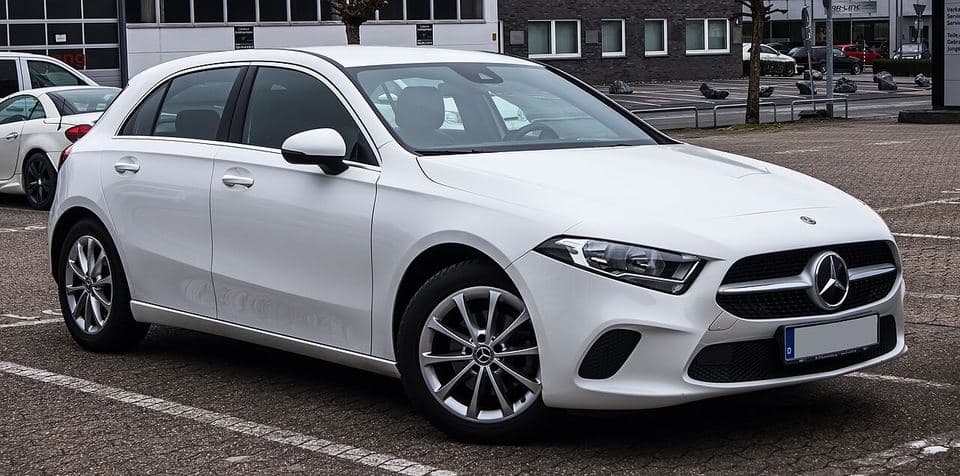
The Mercedes-Benz A-Class is a family hatchback; the latest version we cover is the W177 (2018–). In 2024 MOT tests it scored 108 for reliability (100 is average), ranking 210 of 442, and 21.4% failed first time against a UK average of 28.5%. Its most common MOT failure is tread depth (2.4% of tests). Boot space is 350 litres (1,190 with the seats folded).
Mercedes-Benz A-Class key specs (W177 (2018–), 5-door hatchback)
Price new
£31,870 to £46,175
Boot
350 litres (1,190 seats folded)
Seats
5
Size (L × W × H)
4,428 × 1,796 × 1,423mm
Power
136–218 PS
0–62mph
7.4–9.2 sec
Euro NCAP
5 stars (2018)
2018 on models; figures vary by version. Prices from the July 2026 price list. Sources: tools.mercedes-benz.co.uk, en.wikipedia.org, euroncap.com, autohaus-juergens.de.
Ranked 210 of 442 cars in the 2024 MOT Reliability League, and 12 of 30 family hatchbacks
In 2024, 341,498 Mercedes-Benz A-Classes aged 3 to 20 had an MOT and 21.4% failed first time (UK average 28.5%). Taking age and mileage into account, the Mercedes-Benz A-Class is 7% less likely to fail than the average car of the same age and mileage. At the first MOT, at three years old, 10.2% failed (UK 12.7%).
First-time fail rate
21.4%
UK 28.5%
Fail rate at 3 years
10.2%
UK 12.7%
Average miles a year
8,500
Typical age at test: 7 years
Mercedes-Benz A-Class MOT failure rate by age
Most common Mercedes-Benz A-Class MOT faults
- Tread depth: tread depth below requirements of 1.6mm2.4% of tests
- Coil spring: fractured or broken2.0% of tests
- Brake pads: less than 1.5 mm thick1.9% of tests
- Malfunction indicator lamp: inoperative or indicates a malfunction1.8% of tests
- Condition: has a cut in excess of the requirements deep enough to reach the ply or cords1.7% of tests
- Washers: provides insufficient washer liquid1.6% of tests
What the Mercedes-Benz A-Class fails on
| Area | Tests failing | vs similar cars |
|---|---|---|
| Tyres | 7.2% | ▲ 1.1× as often |
| Lights and electrics | 5.6% | ▼ 26% less often |
| Suspension | 4.7% | ▼ 17% less often |
| Brakes | 4.2% | ▼ 15% less often |
| Visibility | 3.7% | About average |
| Exhaust and emissions | 2.2% | About average |
| Seat belts and airbags | 1.7% | ▲ 2.7× as often |
| Body and structure | 1.2% | ▼ 41% less often |
| Wheels | 0.5% | ▲ 1.8× as often |
| Steering | 0.2% | ▼ 84% less often |
How big is the Mercedes-Benz A-Class's boot?
The W177 (2018–) Mercedes-Benz A-Class has 350 litres of boot space with the rear seats up and 1,190 litres with them folded, according to the manufacturer. That's the 11th biggest of the 11 family hatchbacks we compare; the Skoda Octavia has the most, at 600 litres.
What MPG does the Mercedes-Benz A-Class do?
Official economy for the Mercedes-Benz A-Class ranges from 29.4 to 80.7mpg across the 553 versions listed by the Vehicle Certification Agency (2004–2025). A typical petrol version manages 43.5mpg and a typical diesel 58.9mpg. Expect 10–15% less in real-world driving.
Work out a journey's fuel costHow much is road tax on a Mercedes-Benz A-Class?
Any Mercedes-Benz A-Class first registered from April 2017 pays the standard rate of £200 a year after its first year (2026/27 rates). Versions with a list price over £40,000 pay an extra £440 a year in years two to six. A Mercedes-Benz A-Class registered between March 2001 and March 2017 is taxed on its CO2: £20 to £445 a year.
Work out tax for a specific carMercedes-Benz A-Class specs and running costs
Official figures for 553 versions sold in the UK between 2004 and 2025.
Fuel types
Diesel, Hybrid, Petrol, Plug-in hybrid
Official economy
29.4–80.7 mpg
CO2
16–224 g/km
Power
102–421 PS
| Version | Fuel | Economy | CO2 | Car tax | Company car tax |
|---|---|---|---|---|---|
| A-Class Hatchback A 180 d116 PS · A8 · listed 2025 | Diesel | 56.5 mpg | 132g | £200 | 36% |
| A-Class Saloon A 180 d116 PS · A8 · listed 2025 | Diesel | 56.5 mpg | 130g | £200 | 36% |
| A-Class Hatchback A 200 d150 PS · A8 · listed 2025 | Diesel | 57.7 mpg | 129g | £200 | 35% |
| A-Class Saloon A 200 d150 PS · A8 · listed 2025 | Diesel | 58.9 mpg | 127g | £200 | 35% |
| A-Class Hatchback A 180136 PS · A7 · listed 2025 | Petrol | 48.7 mpg | 131g | £200 | 32% |
| A-Class Saloon A 180136 PS · A7 · listed 2025 | Petrol | 49.6 mpg | 129g | £200 | 31% |
| A-Class Hatchback A 200163 PS · A7 · listed 2025 | Petrol | 48.7 mpg | 131g | £200 | 32% |
| A-Class Saloon A 200163 PS · A7 · listed 2025 | Petrol | 49.6 mpg | 129g | £200 | 31% |
| A-Class Hatchback AMG A 35 4MATIC306 PS · A8 · listed 2025 | Petrol | 34 mpg | 188g | £200 | 37% |
| A-Class Saloon AMG A 35 4MATIC306 PS · A8 · listed 2025 | Petrol | 34.9 mpg | 184g | £200 | 37% |
| A-Class Hatchback AMG A 45 S 4MATIC+421 PS · A8 · listed 2025 | Petrol | 31.4 mpg | 205g | £200 | 37% |
| A-Class Hatchback A 250 e218 PS · A8 · listed 2025 | Plug-in hybrid | 403.6 mpg | 17g | £200 | 10% |
| A-Class Saloon A 250 e218 PS · A8 · listed 2025 | Plug-in hybrid | 403.6 mpg | 16g | £200 | 10% |
| A-Class Saloon Mercedes-AMG A 35 4MATIC225 PS · A8 · listed 2024 | Petrol | 34.9 mpg | 184g | £200 | 37% |
| A-Class Hatchback Mercedes-AMG A 35 4MATIC225 PS · A8 · listed 2024 | Petrol | 34 mpg | 188g | £200 | 37% |
Economy and CO2 are official WLTP figures. Car tax is the yearly rate at current rates for a car first registered in the year listed, before any expensive car supplement. Company car tax is the 2026/27 benefit-in-kind rate. Showing the 15 most recent of 553 versions.
What a Mercedes-Benz A-Class costs to fuel
- petrol, typical official 43.5mpg…
- diesel, typical official 58.9mpg…
Official figures are usually 10–15% better than real-world driving.
Work out a journey in a Mercedes-Benz A-ClassPrevious Mercedes-Benz A-Class generations
Mercedes-Benz A-Class W176 (2012–2018, 5-door hatchback)
Euro NCAP 5 stars (2012)
23.5% of Mercedes-Benz A-Classes built 2012–2018 failed their 2024 MOT first time (all cars that age: 24.8%).
Buying a used Mercedes-Benz A-Class?
Check the MOT history of the exact car: every result, advisory and mileage reading, free.
Compare the Mercedes-Benz A-Class with other family hatchbacks
Reliability, economy, car tax and running costs side by side.
Other Mercedes-Benz models
Frequently asked questions
›Is the Mercedes-Benz A-Class reliable?
Its MOT record is better than average: the Mercedes-Benz A-Class is 7% less likely to fail than the average car of the same age and mileage, with a reliability score of 108 in our 2024 league (100 is average).
›What are common problems with the Mercedes-Benz A-Class?
The most common MOT fault is “Tread depth: tread depth below requirements of 1.6mm”, found in 2.4% of tests. It fails on seat belts and airbags more often than similar cars.
›How big is the Mercedes-Benz A-Class's boot?
The W177 (2018–) Mercedes-Benz A-Class has 350 litres of boot space with the rear seats up and 1,190 litres with them folded, according to the manufacturer. That's the 11th biggest of the 11 family hatchbacks we compare; the Skoda Octavia has the most, at 600 litres.
›What MPG does the Mercedes-Benz A-Class do?
Official economy for the Mercedes-Benz A-Class ranges from 29.4 to 80.7mpg across the 553 versions listed by the Vehicle Certification Agency (2004–2025). A typical petrol version manages 43.5mpg and a typical diesel 58.9mpg. Expect 10–15% less in real-world driving.
›How much is road tax on a Mercedes-Benz A-Class?
Any Mercedes-Benz A-Class first registered from April 2017 pays the standard rate of £200 a year after its first year (2026/27 rates). Versions with a list price over £40,000 pay an extra £440 a year in years two to six. A Mercedes-Benz A-Class registered between March 2001 and March 2017 is taxed on its CO2: £20 to £445 a year.
›How many Mercedes-Benz A-Classes fail their MOT?
21.4% of Mercedes-Benz A-Classes aged 3 to 20 failed their MOT first time in 2024, and 10.2% failed at their first MOT.
Sources: DVSA anonymised MOT tests 2024, all versions of the Mercedes-Benz A-Class combined (Open Government Licence v3.0); official economy and CO2 from Vehicle Certification Agency data, © Crown copyright. VCA cannot accept liability for its accuracy. How we calculate the league.