MINI Hatch vs Renault 5
Figures updated
The Renault 5 is a new rival to the MINI Hatch, one of the UK's most popular superminis. We compare the F66 (2024–) Hatch and the E-Tech (2024–) 5 on price, size, boot space, performance, safety, official economy and running costs.
The short answer
Pick the MINI Hatch for lower fuel costs and more performance, or the Renault 5 for the lower price and the bigger boot.
- The Renault 5 is the cheapest to buy new: from £22,995, £1,740 less than the MINI Hatch.
- The Renault 5 has the biggest boot: 326 litres, 116 more than the MINI Hatch.
- Euro NCAP safety: MINI Hatch 5 stars (2025), Renault 5 4 stars (2024). Ratings from different years aren't directly comparable, as the tests get tougher.
- No MOT reliability comparison yet: the Renault 5 is too new for MOT records (cars first take an MOT at three years old).
- The MINI Hatch is the cheapest to fuel: comparing electric, charged at home versions, about £110 a year less than the Renault 5 at 7,500 miles a year.
- Watch the exhaust and emissions on a MINI Hatch: it fails on them 1.4 times as often as the average car.
| Figure | MINI HatchF66 (2024–), 3-door hatchback | Renault 5E-Tech (2024–), 5-door hatchback |
|---|---|---|
| Price and practicality | ||
| Price newUK list prices, across the range | from £24,735May 2026 price list | £22,995 to £30,695October 2026 price list (best) |
| Body | 3-door hatchback | 5-door hatchback |
| Seats | 4 | 5 (best) |
| BootSeats up / folded | 210 litres / 725 | 326 litres / 1,106 (best) |
| Length | 3,876mm | 3,922mm |
| WidthWithout mirrors | 1,744mm | 1,808mm |
| Height | 1,432mm | 1,498mm |
| Performance | ||
| Power | 121–231 PS (best) | 120–150 PS |
| 0–62mph | 6.1–9.3 sec (best) | 7.9–9.0 sec |
| Safety | ||
| Euro NCAP ratingTests get tougher each year | ★★★★★ (2025) | ★★★★★ (2024) |
| Economy and emissions | ||
| Fuel types | Electric, Petrol | Electric |
| Official economyVersions of this generation | 41.5–46.3 mpg | – |
| CO2 | 134–147 g/km | – |
| Electric range | 180–239 miles | 190–255 miles (best) |
| Running costs at 7,500 miles a year | ||
| Petrol or hybrid171.7p a litre, today's UK average | £1,307 (44.8 mpg) | – |
| Electric, charged at home26.3p per kWh standard tariff | £438 (5 mi/kWh) (best) | £548 (4 mi/kWh) |
| Cheapest version to fuelWhichever fuel costs least | £438 (electric) | £548 (electric) |
| Car tax a yearCars registered from April 2017 | £200 | £200 |
| Reliability from real MOT tests | ||
| Reliability score | 113Above average | Too new for MOT data |
| Failed MOT first time (ages 3–20) | 24.7% | – |
| Failed at 3 years old | 10.8% | – |
| Failed at 5 years old | 12.7% | – |
| Failed at 10 years old | 23.3% | – |
| Most common MOT fault | Position lamp (3.9% of tests) | – |
| Fails more than average on | Exhaust and emissions (1.4×) | – |
| MOT tests analysed | 630,667 | – |
| About the cars | ||
| Type | Supermini | Supermini |
| Owners' average miles a year | 6,500 | – |
| On sale | 2024 on | 2024 on |
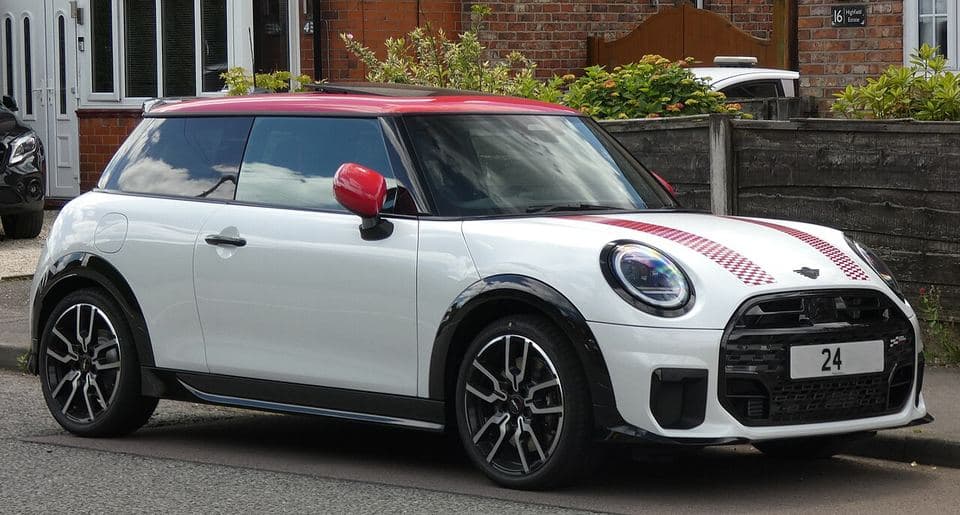
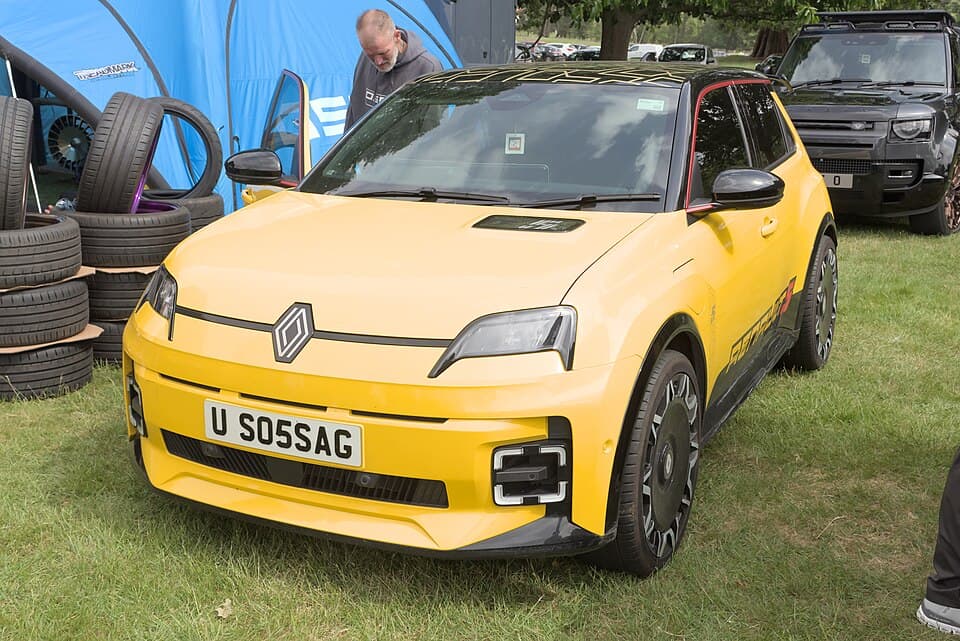
Green marks the better figure where the difference is more than 3%. Reliability figures cover every version of each model tested in the year. Running costs use the typical official economy of recent versions (WLTP where available); real-world economy is usually a little worse for every car.
More comparisons
Frequently asked questions
›Is the MINI Hatch or the Renault 5 more reliable?
It's too early to say from MOT records: the Renault 5 is too new, as cars take their first MOT at three years old. The MINI Hatch has a reliability score of 113 (100 is average) from 630,667 MOT tests in 2024.
›Which is bigger, the MINI Hatch or the Renault 5?
The Renault 5 is 46mm longer (3,922mm against 3,876mm). The Renault 5 has the bigger boot: 326 litres against 210.
›Which is cheaper to buy, the MINI Hatch or the Renault 5?
The Renault 5: new prices start at £22,995, £1,740 less than the MINI Hatch (from £24,735). These are manufacturer list prices; dealers and brokers often sell for less.
›Which is cheaper to run, the MINI Hatch or the Renault 5?
Comparing electric versions, the MINI Hatch costs about £110 a year less to fuel at 7,500 miles (£438 against £548), using typical official economy and current UK average fuel prices.
›Which is safer, the MINI Hatch or the Renault 5?
Euro NCAP gave the MINI Hatch 5 stars (2025) and the Renault 5 4 stars (2024). Euro NCAP makes its tests tougher every few years, so ratings from different years aren't directly comparable.
›Should I buy the MINI Hatch or the Renault 5?
Pick the MINI Hatch for lower fuel costs and more performance, or the Renault 5 for the lower price and the bigger boot. The comparison above sets out price, space, performance, safety, running costs and reliability side by side.
Sources: manufacturers' UK specifications and price lists and Euro NCAP (listed on each model's page); DVSA anonymised MOT tests 2024 (Open Government Licence v3.0); Vehicle Certification Agency car fuel data, © Crown copyright, VCA cannot accept liability for its accuracy; fuel prices from the GOV.UK Fuel Finder scheme. Photos from Wikimedia Commons, credited under each picture.